
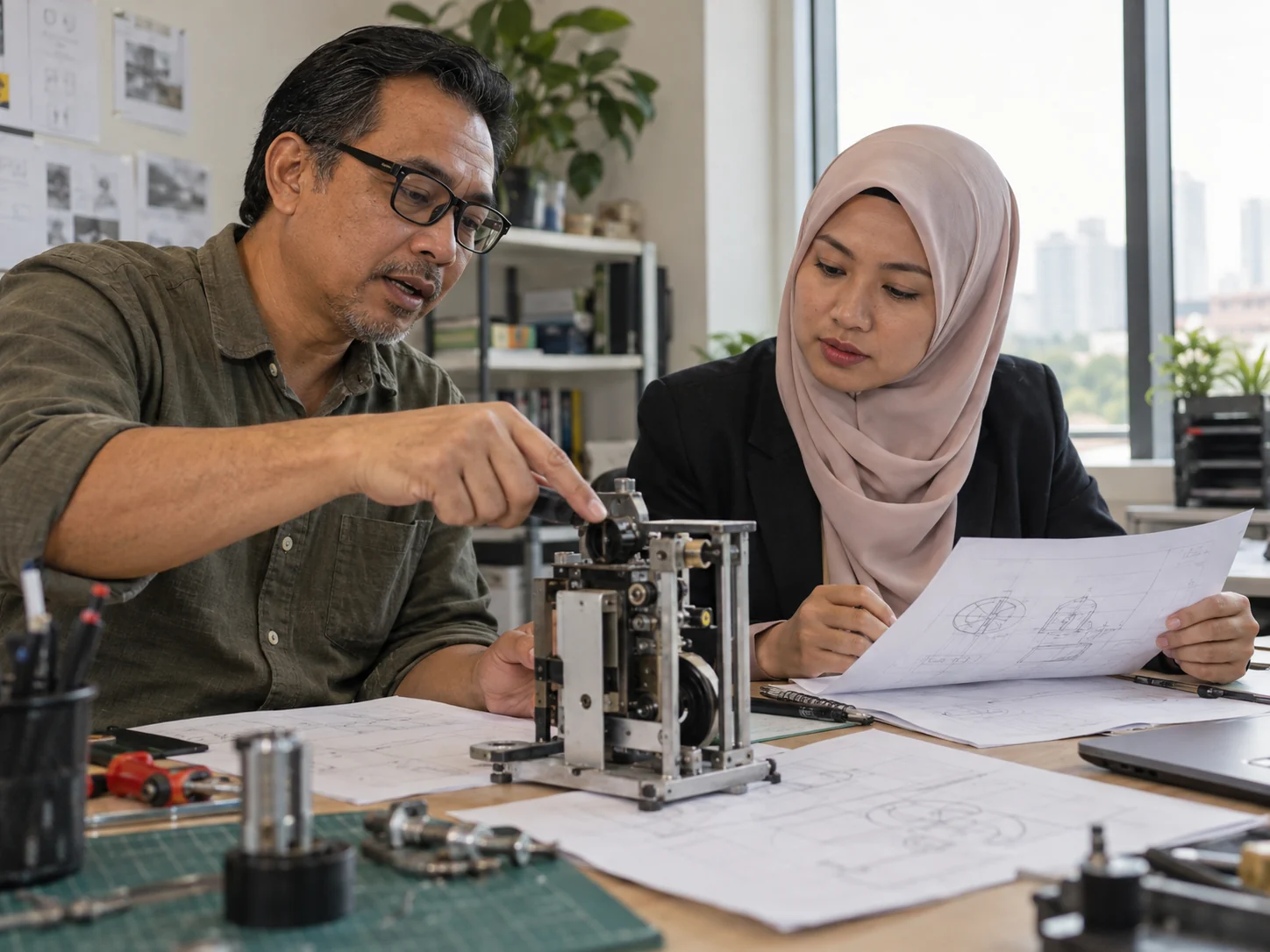
Patent invalidation: explore five articles on Anticipation and Obviousness Require Different Explanations, A Failed Invalidation Counterclaim Does Not Prove Infringement, Private Premises Do Not Necessarily Preserve Patent Novelty. Use the contents below to jump to a topic, and follow the related guides to continue your reading.
Adapted from a manuscript by Lawrence Yip.
General information, not legal advice. These articles reflect the supplied editorial collection and its citation audit; check current law and the original authorities before relying on them.
Anticipation and Obviousness Require Different Explanations
A challenge alleging lack of novelty is not interchangeable with a challenge alleging lack of inventive step. Under sections 14 and 15, the first asks whether the claimed invention was already disclosed; the second asks whether the claimed advance would have been obvious to the person having ordinary skill in the art.[34]
That distinction determines how the prior-art case should be presented. An anticipation argument identifies a qualifying disclosure and shows where it teaches every required feature and relationship. An obviousness argument identifies the difference from the earlier teaching and explains why ordinary technical knowledge would have led to the claimed arrangement.
A missing feature cannot simply disappear between those analyses. A challenger may contend that it is inherently disclosed and, alternatively, that adding it would have been obvious. The alternative needs its own reasoning rather than a repetition of the novelty allegation.
For the patent owner, answering one ground does not necessarily answer the other. Establishing a genuine difference may defeat anticipation while leaving an obviousness argument unresolved.
A disciplined invalidation case therefore states which ground is advanced against each claim, which evidence supports it and how the conclusion follows. Labels cannot replace the technical comparison required by the statutory test.
Sources and case references
- Patents Act 1983 (Act 291) (Malaysia), sections 14, 15 and 56(2)(a).
A Failed Invalidation Counterclaim Does Not Prove Infringement
Validity and infringement impose different questions and evidential burdens. Yeohata Machineries Sdn Bhd & Anor v Coil Master Sdn Bhd & Ors[35] illustrates why success on one issue does not automatically determine the other.
The dispute concerned machinery associated with mosquito-coil manufacture. The Court of Appeal found that the invalidation case lacked adequate admissible technical proof and reversed the invalidation order. That outcome did not restore the patentee’s infringement claim, which remained dismissed.
The two conclusions are legally coherent. A challenger must establish the grounds on which a patent should be invalidated. A proprietor must separately establish that the defendant’s acts fall within the protected invention. An evidential failure in the counterclaim does not supply missing proof in the principal action.
The case also demonstrates the importance of matching opinion evidence to the witness’s qualifications and experience. Assertions about earlier machinery or technical similarity require an admissible foundation, not merely confidence in the asserted result.
For litigation planning, the lesson is to prepare two separate evidential paths. One addresses the patent’s survival; the other addresses the accused product or process. A party should not assume that defeating an opponent’s technical argument proves every proposition necessary for its own claim.
Sources and case references
- Yeohata Machineries Sdn Bhd & Anor v Coil Master Sdn Bhd & Ors [2016] 2 CLJ 414 (Court of Appeal, Malaysia).
Private Premises Do Not Necessarily Preserve Patent Novelty
A prototype does not remain confidential merely because it operates inside privately owned premises. In YKL Engineering Sdn Bhd v Sungei Kahang Palm Oil Sdn Bhd & Anor[36], the Federal Court considered whether an earlier fruit-bunch-splitting prototype had made the claimed invention available before the patent application.
The inquiry concerned what a lawful observer could learn and whether that observer was subject to a duty of confidence. The private character of the mill did not, by itself, establish confidentiality. On the evidence, disclosure of the pleaded prototype was sufficient to sustain the invalidation outcome.
This distinction matters during development trials. A machine may reveal its relevant operating arrangement to visitors, customers or industry personnel without a published technical paper. Conversely, the existence of an old machine is not enough: the evidence must establish its earlier configuration and the information actually made available.
The practical response is to manage access before demonstrations begin. Confidentiality undertakings, visitor arrangements and contemporaneous records should address who may observe the technology and what they may disclose.
Novelty is not protected by calling an activity a trial. Its legal effect depends on the circumstances and content of disclosure. Development teams should treat the public-access question as part of patent planning, not as an issue to reconstruct after litigation starts.
Sources and case references
- YKL Engineering Sdn Bhd v Sungei Kahang Palm Oil Sdn Bhd & Anor [2022] 6 MLJ 1 (Federal Court, Malaysia).
Prior Art Must Be Pleaded, Not Introduced by Surprise
Technical relevance does not excuse inadequate pleading. In YKL Engineering Sdn Bhd v Sungei Kahang Palm Oil Sdn Bhd & Anor[37], the Federal Court rejected reliance on an unpleaded machine while maintaining the patent’s invalidation on a separately pleaded prototype.
The distinction is important. The court did not hold that every earlier machine mentioned during trial could be considered regardless of the pleadings. The opposing party needed fair notice of the material prior art so that inspection, expert analysis and responsive evidence could be prepared.
Equally, excluding one reference did not automatically restore the patent. Another properly identified disclosure independently supported the result. A procedural error must therefore be examined alongside the grounds that remain legally and evidentially available.
For a challenger, the pleading should identify the prior-art case with sufficient particularity. A general reservation of unspecified earlier technology is not a substitute for explaining which disclosure is relied upon and why it matters.
For the proprietor, objections should distinguish procedural admissibility from the substantive effect of the remaining evidence. Winning an argument about an unpleaded reference may narrow the case without deciding it.
The practical lesson is to align pleadings, technical reports and trial evidence early. Patent litigation requires both a persuasive technical theory and a fair procedure for testing it.
Sources and case references
- YKL Engineering Sdn Bhd v Sungei Kahang Palm Oil Sdn Bhd & Anor [2022] 6 MLJ 1 (Federal Court, Malaysia).
An Unclaimed Advantage Cannot Rescue a Broader Monopoly
A specification may describe an attractive technical advantage without making that advantage part of every claim. Spind Malaysia Sdn Bhd v Justrade Marketing Sdn Bhd & Ors[38] demonstrates why the inventive concept cannot be reconstructed from a benefit that the asserted claim does not require.
The floor-trap dispute included reliance on reparability. The Federal Court directed attention to the claims rather than allowing a general account of the invention’s advantages to replace their actual scope. The description and drawings could assist interpretation, but could not supply a different invention merely because it would present a stronger case for patentability.
That reasoning exposes a drafting risk. An independent claim may be broader than the embodiment that produces the benefit relied upon. Defending the broad claim by reference only to that narrower embodiment leaves the relationship between scope and contribution unexplained.
The solution is not to include every prototype detail. It is to identify which structural or functional relationships produce the relevant contribution and ensure that the claim expresses them at a supported level of generality.
During invalidation proceedings, the same discipline applies to expert evidence. The expert should explain the invention actually claimed, not a commercially improved version that appears elsewhere in the specification. Patentability must be defended at the scope for which exclusivity is asserted.
Sources and case references
- Spind Malaysia Sdn Bhd v Justrade Marketing Sdn Bhd & Ors [2018] 2 MLRA 281 (Federal Court, Malaysia).